
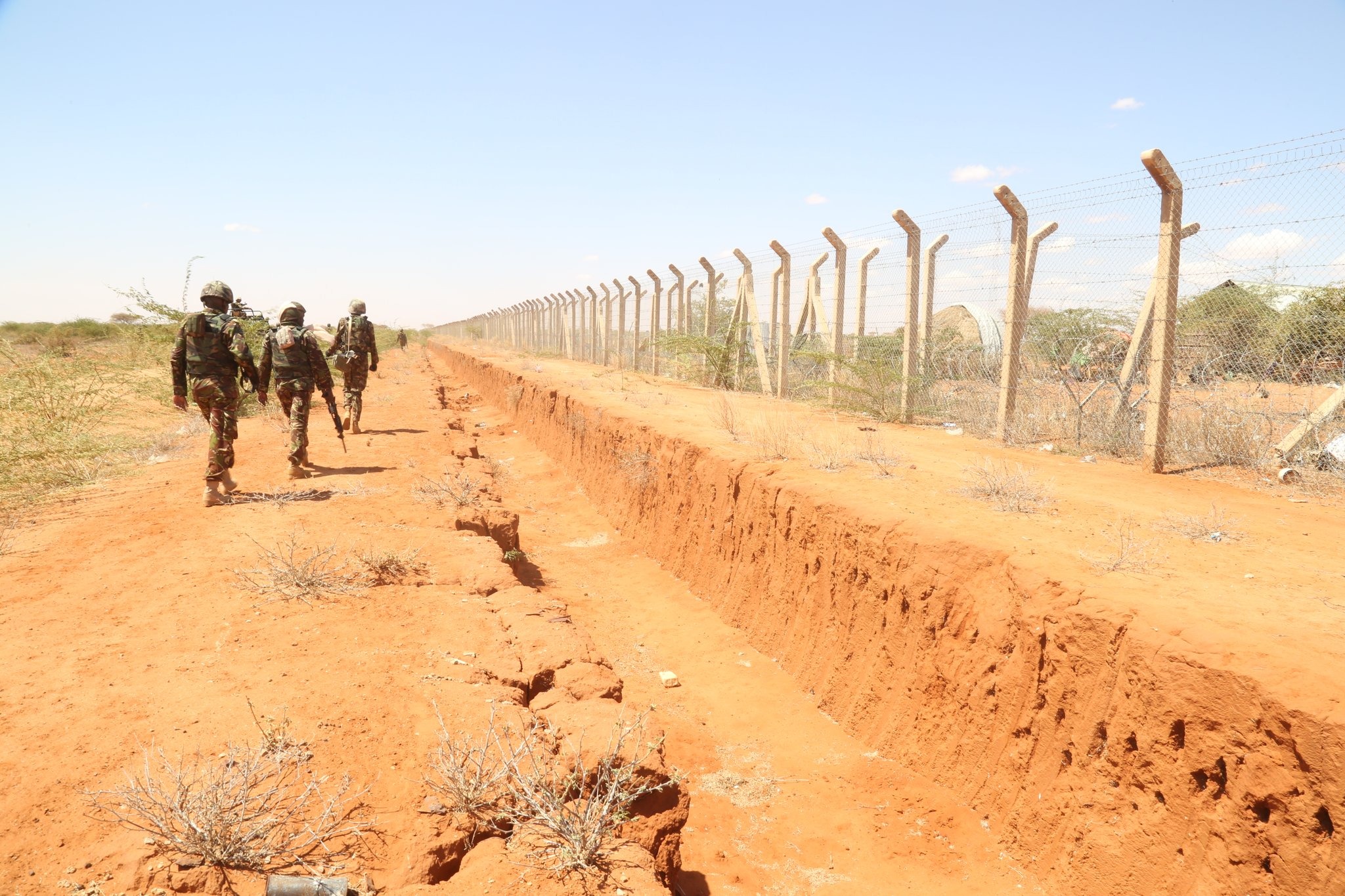
The Kenya Kwanza Administration continues to strengthen integrated border management as a critical pillar of national security, economic growth, public safety, regional integration, revenue protection, trade facilitation, and health security. Through coordinated action among government agencies operating at points of entry, the Government is enhancing the country’s capacity to facilitate lawful movement, protect national interests, support economic activity, strengthen border governance, and respond effectively to emerging cross border challenges.
This commitment was reaffirmed on Saturday, 6th June 2026, when Principal Secretary for Internal Security and National Administration Dr. Raymond Omollo visited the Taveta Holili One Stop Border Post to assess the country’s preparedness against Ebola and review precautionary measures that have been activated at points of entry. The visit formed part of ongoing efforts to ensure that surveillance systems, operational procedures, inter agency coordination structures, and emergency response mechanisms remain fully functional and capable of supporting national preparedness objectives.
The inspection also highlighted the important role played by the Border Control and Operations Coordination Committee (BCOCC), the national multi agency framework responsible for coordinating border management functions across government institutions. The Committee brings together agencies responsible for immigration management, customs administration, border security, public health protection, trade facilitation, revenue collection, standards enforcement, and other functions that contribute to effective border governance.
Kenya shares approximately 3,500 kilometres of land borders with neighbouring countries and hosts numerous land border crossings, international airports, and seaports that facilitate regional trade, tourism, transport, investment, and movement of people. These points of entry serve as strategic gateways connecting Kenya to regional and international markets and play an important role in supporting economic growth, regional cooperation, and national development.
The volume of activities taking place within the border environment requires close coordination among institutions whose responsibilities intersect at points of entry. Immigration officers, customs officials, security agencies, public health authorities, National Government Administration Officers, county governments, standards agencies, and transport regulators all contribute to the efficient functioning of border operations. Effective coordination among these institutions supports seamless service delivery and strengthens the country’s ability to address challenges affecting border management.
Through BCOCC, Government agencies are able to share information, align operational priorities, coordinate interventions, address emerging challenges, strengthen compliance, facilitate trade, protect revenue, enhance public safety, and support efficient movement through points of entry. The Committee provides a platform through which institutions can work collectively in pursuit of common national objectives.
Integrated border management has become increasingly important as trade volumes, regional mobility, tourism activity, transport connectivity, and cross border interactions continue to expand. Government institutions must continuously strengthen systems capable of facilitating movement, supporting commerce, protecting citizens, enforcing regulations, and safeguarding national interests.
The Ebola outbreaks reported in the Democratic Republic of Congo and Uganda have reinforced the importance of maintaining strong preparedness systems within this broader border management framework. While Kenya remains free of Ebola, the Government has activated enhanced surveillance, screening, monitoring, and response measures at points of entry to ensure the country remains prepared against any potential threat.
The Taveta Holili One Stop Border Post serves as one of Kenya’s important regional gateways and facilitates substantial movement of travellers, traders, tourists, transporters, commercial vehicles, and cargo between Kenya and Tanzania. The facility provides a practical example of how multiple agencies work together within a coordinated operational environment to facilitate movement, support trade, protect revenue, strengthen security, and safeguard public health.
During the inspection, Dr. Omollo received updates on operational readiness, preparedness measures, surveillance arrangements, institutional coordination mechanisms, and response procedures that have been activated to strengthen national preparedness. The assessment provided an opportunity to review existing systems, evaluate operational capacity, and ensure that institutions operating within the border environment remain ready to respond effectively to emerging challenges.
The Kenya Kwanza Administration continues to prioritize investments aimed at strengthening integrated border management, improving service delivery at points of entry, enhancing institutional coordination, supporting trade facilitation, strengthening security, protecting public resources, and building resilient systems capable of supporting the country’s development aspirations. These efforts continue to contribute to stronger border governance, improved operational efficiency, enhanced public safety, and increased confidence in the institutions responsible for managing Kenya’s borders.
Strengthening Health Security and Public Health Preparedness at Points of Entry
The visit by PS Dr. Raymond Omollo to the Taveta Holili One Stop Border Post brought into focus one of the critical functions supported through integrated border management: protecting public health through coordinated preparedness, surveillance, and response systems. The inspection provided an opportunity to assess measures that have been activated across points of entry following the Ebola outbreaks reported in the Democratic Republic of Congo and Uganda and to review the level of readiness among agencies responsible for safeguarding the country against potential public health threats.
Kenya remains free of Ebola. The Government has nevertheless maintained heightened vigilance and activated precautionary measures designed to strengthen preparedness, support early detection, facilitate rapid response, and enhance coordination among institutions operating within the border environment. These measures form part of a broader strategy aimed at protecting citizens, preserving confidence in public health systems, and ensuring that economic activity, travel, trade, and regional mobility continue without disruption.
The effectiveness of this approach depends on several interconnected interventions. These include:
- Strengthening surveillance and early warning systems
Surveillance remains one of the most important components of disease prevention and public health protection. Effective surveillance enables Government institutions to identify potential risks quickly, assess emerging developments, and implement appropriate interventions whenever concerns arise.
At points of entry, surveillance activities involve continuous monitoring, risk assessment, verification of information, reporting procedures, and coordination among agencies responsible for public health protection. These systems support situational awareness and provide authorities with the information required to make timely decisions concerning preparedness and response.
The surveillance framework operating within the border environment benefits significantly from the coordination provided through BCOCC. Agencies responsible for immigration management, customs administration, public health protection, security operations, and border governance are able to exchange information efficiently and support collective action whenever circumstances require intervention.
- Enhancing screening and monitoring measures
Screening and monitoring activities support the country’s preparedness objectives through strengthening vigilance at points of entry and ensuring that institutions remain informed about developments requiring attention.
The Government has continued to enhance monitoring arrangements across key border crossings, airports, and other points of entry as part of precautionary measures activated following developments within the region. These measures support the identification of situations requiring further assessment and contribute to the broader objective of protecting public health.
The implementation of screening and monitoring procedures relies on close collaboration among institutions operating within the border environment. Effective communication among agencies strengthens coordination and helps ensure that preparedness measures are implemented consistently.
- Strengthening emergency response and referral systems
Preparedness requires institutions capable of responding quickly and effectively whenever intervention becomes necessary. Government agencies have continued to strengthen referral arrangements linking points of entry with healthcare facilities, laboratories, emergency response teams, county governments, and national coordination structures.
These arrangements support efficient communication, facilitate mobilization of resources, and strengthen the country’s capacity to manage potential public health concerns. Clear referral pathways help ensure that information reaches relevant institutions promptly and that appropriate action can be undertaken whenever required.
Operational readiness within emergency response systems remains an important aspect of national preparedness because rapid coordination often influences the effectiveness of interventions undertaken during public health events.
- Enhancing collaboration between national and county institutions
Health security depends on strong collaboration among institutions operating at different levels of government. National government agencies provide strategic leadership, border management coordination, policy direction, and oversight. County governments contribute through healthcare service delivery, disease surveillance, public health interventions, emergency response support, and community engagement.
Border counties occupy an especially important position within this framework due to their interaction with cross border movement and regional mobility. Continuous engagement among national and county institutions strengthens preparedness and supports effective implementation of response measures whenever circumstances require action.
This partnership also contributes to stronger information sharing, improved resource coordination, and enhanced responsiveness within areas that experience substantial movement of people and goods.
- Supporting preparedness through National Government Administration Officers
National Government Administration Officers provide an important connection between Government institutions and communities. Their presence across counties, sub counties, locations, and sub locations enables Government programmes and interventions to reach citizens effectively.
County Commissioners, Deputy County Commissioners, Assistant County Commissioners, Chiefs, and Assistant Chiefs support awareness campaigns, dissemination of Government advisories, local coordination efforts, and communication between communities and relevant authorities. Their engagement helps strengthen preparedness and promotes public cooperation with measures implemented to safeguard public health.
The extensive reach of the National Government Administration structure also enhances Government’s ability to communicate quickly during periods requiring heightened vigilance and supports implementation of preparedness initiatives at the grassroots level.
- Promoting public awareness and confidence
Public awareness remains an important component of preparedness because informed citizens are better positioned to support public health interventions and respond appropriately to official guidance.
The Government continues to encourage the public to rely on verified information provided through official channels and to support measures implemented to protect public health. Accurate information helps reduce uncertainty, strengthens public confidence, and promotes cooperation between citizens and institutions responsible for managing public health concerns.
Strong public awareness contributes significantly to preparedness because communities form an important part of the national response framework and play a valuable role in supporting vigilance, communication, and adherence to public health guidance.
The implementation of these measures reflects the coordinated approach adopted through integrated border management. Surveillance systems, screening procedures, emergency response arrangements, county government collaboration, community engagement structures, and public awareness initiatives all contribute to strengthening the country’s preparedness framework and enhancing its capacity to respond effectively to emerging public health challenges.
Regional cooperation, engagement with border communities, and collaboration among institutions operating across neighbouring countries also continue to support these efforts and strengthen collective preparedness across the wider East African region.
Enhancing Regional Cooperation, Border Communities, and Cross Border Partnerships
The effectiveness of border management depends significantly on the strength of relationships established among neighbouring countries, border communities, regional institutions, development partners, and government agencies operating on both sides of international boundaries. Many of the opportunities and challenges associated with border management extend across jurisdictions, making cooperation an important component of effective governance and service delivery.
Kenya’s strategic location within East Africa places the country at the centre of regional transport, trade, tourism, investment, and migration networks. Every day, thousands of people interact across borders in pursuit of business opportunities, employment, education, healthcare services, tourism activities, family engagements, and commercial transactions. These interactions contribute to economic growth and social development while reinforcing the importance of coordinated approaches to border management.
The Border Control and Operations Coordination Committee supports this objective through promoting engagement and collaboration among institutions whose work influences activities within the border environment. The Committee’s role contributes to stronger partnerships, improved communication, and more effective management of issues affecting communities, businesses, travellers, and government agencies operating across borders.
Several areas demonstrate the importance of these partnerships. These include:
- Strengthening cooperation with neighbouring countries
Border management functions most effectively when neighbouring countries maintain regular engagement and communication concerning issues affecting shared border spaces. Security concerns, trade facilitation measures, immigration management, customs administration, transport operations, and public health preparedness all benefit from cooperation among institutions operating across international boundaries.
Regular engagement among government agencies creates opportunities to address operational challenges, improve efficiency, strengthen compliance, and enhance coordination in areas where activities on one side of the border may affect operations on the other. These interactions contribute to more predictable border management systems and support smoother movement across points of entry.
Cooperation also strengthens the capacity of institutions to address emerging challenges through coordinated planning, information sharing, and joint problem solving initiatives that promote mutual benefits for neighbouring countries.
- Supporting border communities and local economic activity
Border communities play an important role in regional economies and remain among the primary beneficiaries of efficient border management systems. Cross border trade supports livelihoods for thousands of families, creates business opportunities, stimulates local markets, and contributes to economic growth within border regions.
Government investments in border infrastructure, improved coordination, and enhanced service delivery create opportunities for communities to participate more effectively in economic activities linked to regional commerce. Efficient border operations support traders, transporters, service providers, hospitality businesses, and other enterprises whose success depends on cross border interactions.
Strong engagement with border communities also enables Government institutions to better understand local realities and incorporate community perspectives into initiatives aimed at strengthening border governance.
- Facilitating regional trade and economic integration
Regional trade remains one of the most significant drivers of economic growth within East Africa. Efficient border operations support the movement of goods between producers and markets, strengthen supply chains, improve market access, and enhance competitiveness among businesses operating within the region.
The work undertaken through integrated border management contributes directly to these objectives through supporting efficient clearance processes, improving coordination among agencies, reducing administrative bottlenecks, and strengthening operational efficiency at points of entry.
These improvements benefit businesses of all sizes and contribute to broader efforts aimed at advancing regional integration and economic cooperation.
- Supporting transport connectivity and logistics networks
Kenya serves as a major transport and logistics hub linking countries within East and Central Africa to regional and international markets. Road transport corridors, aviation networks, railway connections, and maritime infrastructure all depend on efficient border systems capable of facilitating movement while maintaining necessary regulatory controls.
The effectiveness of these networks influences transportation costs, delivery timelines, business competitiveness, and investment attractiveness. Coordination among agencies operating at points of entry contributes to smoother movement of cargo and passengers and strengthens the efficiency of logistics systems supporting regional commerce.
Enhanced coordination also supports infrastructure investments aimed at improving connectivity and strengthening economic linkages across the region.
- Promoting people to people connections and regional mobility
Border management influences the daily lives of citizens who travel for business, education, employment, tourism, cultural exchange, healthcare services, and family engagements. Efficient and predictable border systems contribute to positive travel experiences and support greater interaction among communities across the region.
Government efforts aimed at improving coordination and service delivery at points of entry strengthen mobility and create opportunities for increased economic and social engagement. These interactions contribute to stronger regional relationships and support broader integration objectives pursued through regional cooperation frameworks.
The ability of institutions to facilitate lawful movement efficiently remains an important component of modern border governance and contributes to national and regional development objectives.
- Strengthening resilience through shared responsibility
Many of the challenges affecting border management require collective action among multiple stakeholders. Security concerns, public health risks, illicit trade, migration pressures, environmental issues, and operational challenges often involve actors operating across different jurisdictions and sectors.
Addressing such challenges requires sustained engagement among governments, regional institutions, communities, businesses, and development partners. Strong partnerships strengthen resilience and enhance the ability of institutions to respond effectively to evolving circumstances affecting border operations.
The collaborative approach supported through BCOCC contributes to this objective through fostering relationships that support information sharing, joint planning, coordinated interventions, and long term solutions to challenges affecting border management.
The continued strengthening of these partnerships contributes to more efficient border operations, stronger regional cooperation, improved service delivery, enhanced economic opportunities, and greater resilience across Kenya’s border ecosystem. Through sustained collaboration and coordinated action, border management institutions continue to support national development objectives while strengthening Kenya’s role as a leading gateway for trade, transport, tourism, and regional integration.
Investments Strengthening Border Management, Service Delivery, and National Preparedness
The effectiveness of integrated border management depends on continuous investment in infrastructure, technology, institutional coordination, human capital development, and operational systems that support efficient and secure movement through points of entry. Over the years, Kenya has undertaken significant investments aimed at modernizing border operations, strengthening service delivery, facilitating trade, improving regional connectivity, enhancing preparedness, and protecting national interests.
These investments continue to strengthen the work undertaken through the Border Control and Operations Coordination Committee and demonstrate the Government’s commitment to building a modern border management system capable of responding to the demands of a rapidly changing regional and global environment.
Key investments and interventions include:
- Modernization of border infrastructure through One Stop Border Posts
Kenya has invested in the establishment and operationalization of One Stop Border Posts at strategic crossing points including Busia, Malaba, Taveta Holili, Namanga, Moyale, Lunga Lunga, Isebania, and Suam. These facilities have transformed the management of cross border movement through bringing together agencies responsible for immigration management, customs administration, standards compliance, public health protection, security operations, and trade facilitation within coordinated operational environments.
The facilities support some of the region’s most important transport and trade corridors linking Kenya with Uganda, Tanzania, Ethiopia, Rwanda, South Sudan, Burundi, and the eastern region of the Democratic Republic of Congo. The coordinated approach adopted within these facilities has improved efficiency, strengthened institutional collaboration, reduced duplication of procedures, and enhanced service delivery for travellers, traders, and transporters.
The Taveta Holili One Stop Border Post inspected by Dr. Raymond Omollo forms part of this broader investment programme that continues to strengthen regional connectivity while supporting national security, trade facilitation, and public health protection objectives.
- Strengthening regional trade corridors and transport connectivity
Kenya remains a leading gateway for trade and logistics within East and Central Africa. The Port of Mombasa continues to serve as the principal maritime gateway for Kenya and several neighbouring countries, handling more than 40 million tonnes of cargo annually and supporting regional supply chains that extend far beyond Kenya’s borders.
Government investments in road infrastructure, port modernization, logistics systems, and transport connectivity have strengthened the efficiency of the Northern Corridor and other strategic trade routes that support movement of goods across the region. Border management institutions play an important role in ensuring that these investments deliver maximum value through facilitating efficient movement of cargo and reducing operational bottlenecks.
The performance of border facilities directly influences trade competitiveness, transport efficiency, investment attractiveness, and economic growth throughout the region.
- Deployment of technology and digital government systems
Technology has become a central pillar in the modernization of border management operations. Government institutions have continued to deploy digital systems that support immigration processing, customs administration, traveller management, information sharing, compliance monitoring, and service delivery.
The digitization of government services through platforms such as eCitizen has transformed access to public services and strengthened efficiency across multiple sectors. Immigration services have benefited from biometric passport systems, digital permit processing, electronic records management platforms, and integrated traveller information systems that support secure and efficient movement.
Digital customs systems have strengthened cargo management, revenue collection, compliance oversight, and operational coordination among agencies operating within the border environment. These investments have improved transparency, strengthened accountability, and enhanced the quality of services delivered to citizens and businesses.
- Strengthening institutional coordination through BCOCC
One of the most important investments undertaken by Government has been the strengthening of institutional coordination structures capable of bringing together agencies whose responsibilities intersect within the border environment.
The Border Control and Operations Coordination Committee provides a platform through which institutions responsible for immigration management, customs administration, border security, public health protection, trade facilitation, standards enforcement, intelligence gathering, revenue protection, and transport regulation can coordinate activities and address challenges collectively.
This framework has strengthened information sharing, improved operational efficiency, enhanced responsiveness to emerging issues, and supported implementation of integrated border management principles across the country’s points of entry. The result has been stronger collaboration among institutions and improved service delivery for citizens, travellers, traders, and investors.
- Building the capacity of frontline personnel
The success of border management systems depends heavily on the professionalism, competence, and preparedness of the officers responsible for implementing Government policies and procedures.
Continuous investments in training, professional development, preparedness exercises, operational coordination forums, and multi agency engagements have strengthened the capabilities of immigration officers, customs officials, security personnel, public health teams, National Government Administration Officers, and other frontline staff operating within the border environment.
These investments have enhanced institutional knowledge, strengthened operational readiness, improved service delivery standards, and equipped officers with the skills required to respond effectively to emerging challenges affecting border operations.
- Strengthening preparedness and emergency response capabilities
The Ebola preparedness measures inspected at Taveta Holili illustrate broader investments that have been undertaken to strengthen national preparedness and emergency response capacity. Lessons learned from previous public health emergencies have informed efforts aimed at enhancing surveillance systems, strengthening referral mechanisms, improving coordination structures, and enhancing communication among institutions responsible for public health protection.
Government agencies continue to maintain preparedness arrangements linking points of entry with healthcare facilities, laboratories, emergency response teams, county governments, and national coordination structures. These systems support rapid information sharing, timely decision making, efficient mobilization of resources, and coordinated implementation of response measures whenever circumstances require action.
The precautionary measures currently in place demonstrate the country’s commitment to vigilance, preparedness, and protection of public health through coordinated action among multiple institutions.
Conclusion
The Border Control and Operations Coordination Committee continues to play a central role in strengthening integrated border management through coordinated action among institutions responsible for immigration management, customs administration, border security, trade facilitation, revenue protection, public health protection, and regulatory oversight. This coordinated framework has enhanced the country’s capacity to manage increasingly complex border operations while supporting national development priorities.
The inspection undertaken by Principal Secretary for Internal Security and National Administration Dr. Raymond Omollo at the Taveta Holili One Stop Border Post demonstrated the practical value of this coordination in safeguarding national interests and strengthening preparedness at points of entry. The visit highlighted the effectiveness of collaboration among agencies operating within the border environment and reinforced the importance of maintaining high levels of readiness in response to emerging challenges.
Kenya’s investment in One Stop Border Posts, transport connectivity, digital government systems, institutional coordination structures, human capital development, and preparedness capabilities continues to strengthen border governance and improve service delivery across the country’s network of points of entry. These interventions are contributing to more efficient trade corridors, stronger revenue protection, improved public safety, enhanced service delivery, and greater confidence in the institutions responsible for managing cross border movement.
The work undertaken through the Border Control and Operations Coordination Committee also supports broader national objectives linked to economic growth, regional integration, tourism development, investment promotion, transport connectivity, and public health protection. Efficient border operations facilitate lawful movement, strengthen commercial activity, support regional cooperation, and create an enabling environment for businesses, travellers, investors, and communities that depend on effective border systems.
As regional trade, mobility, and economic interactions continue to expand, the importance of coordinated border management will continue to grow. Through sustained investment, institutional collaboration, adoption of technology, modernization of infrastructure, and continuous strengthening of operational capabilities, the Government remains committed to building secure, efficient, resilient, and future ready border management systems capable of supporting Kenya’s long term development aspirations.
The Border Control and Operations Coordination Committee will continue to provide the coordination, leadership, and institutional framework required to safeguard national interests, facilitate economic opportunity, strengthen public safety, protect public health, and position Kenya as a leading gateway for trade, transport, tourism, and regional integration within Africa.
